[Illustrated] AI Avatar YouTube Channels Revealed: $30K/Month With Claude + 100+ Multi-Niche Case Replication Table
Many people are afraid to create AI content on YouTube mainly because they do not know the right method. Over the past 30 days, this faceless YouTube channel made $7,900.
Many people are afraid to create AI content on YouTube mainly because they do not know the right method. Over the past 30 days, this faceless YouTube channel made $7,900.
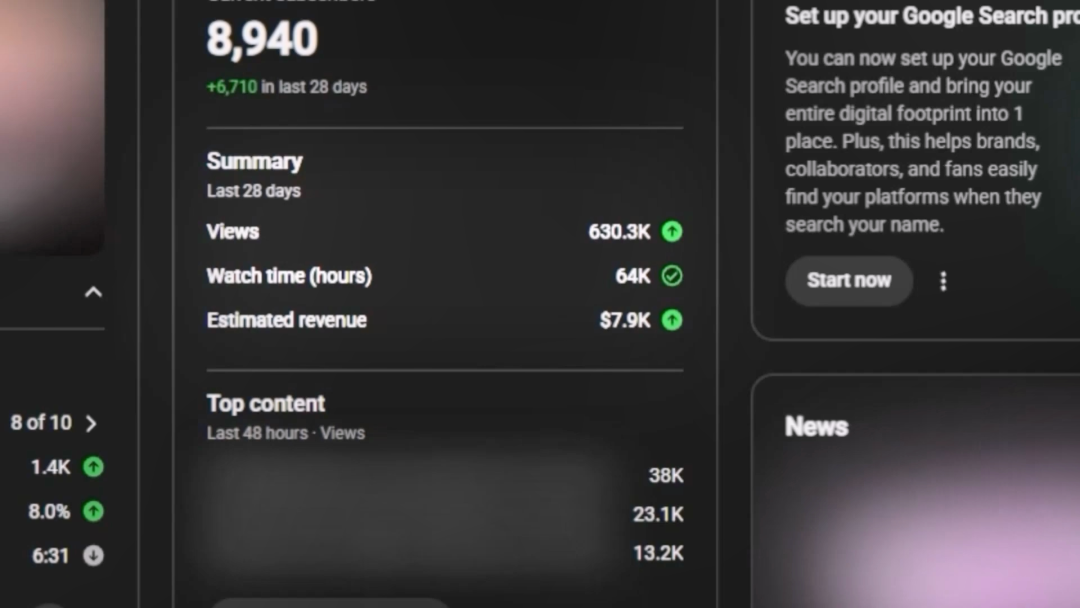
The video production process was basically completed using Claude. This article will reveal every step and show multiple channels in the same field that make $10,000, or even $100,000, in a single month. All these channels have one thing in common: they are AI avatar channels. The people featured on these channels are entirely AI-generated rather than real, and they explain topics within specific niches.
Let’s look directly at examples of AI avatar channels in different niches. VidIQ data shows that these channels receive an astonishing number of views, reaching 1.5 million views over the past 30 days. Because they use AI avatars and operate in high-RPM niches with middle-aged and older audiences, their RPM (revenue per 1,000 views) is at least $10.
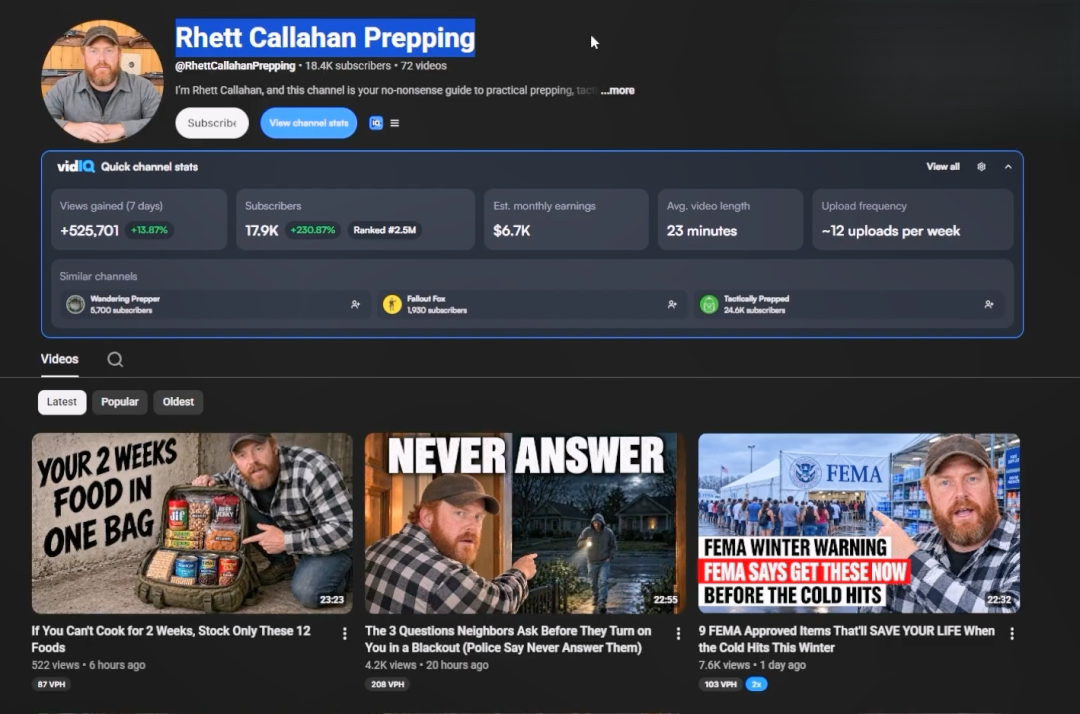
Rhett Callahan Prepping focuses on doomsday preparedness.
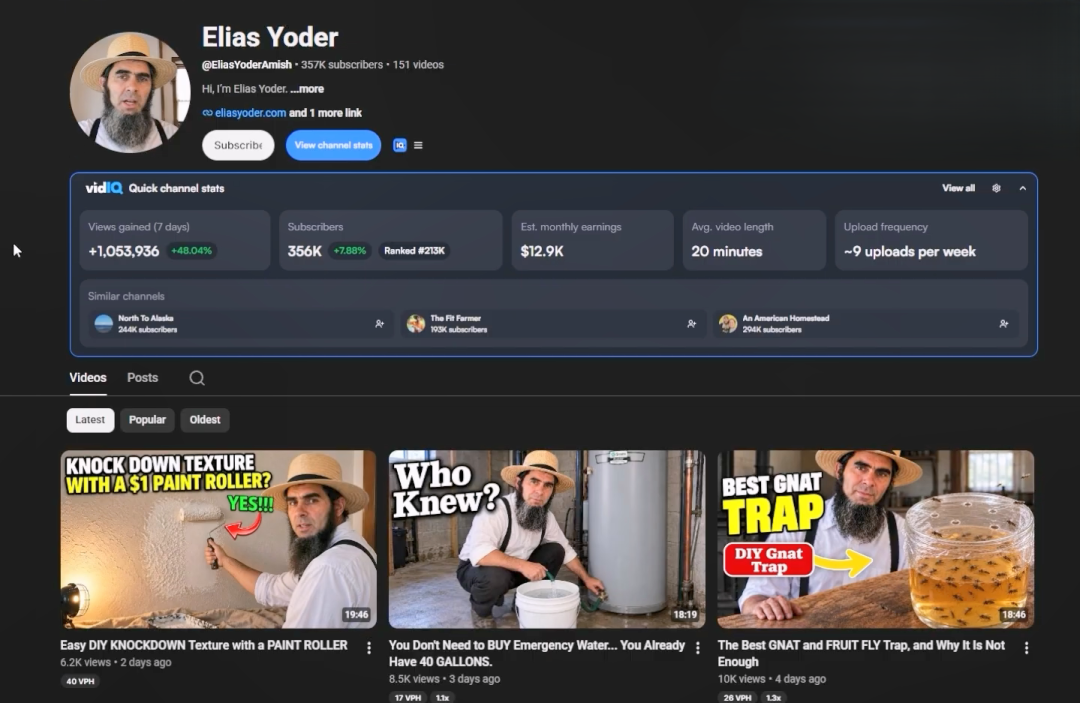
Elias Yoder is presented as an Amish man and made $28,000 last month.
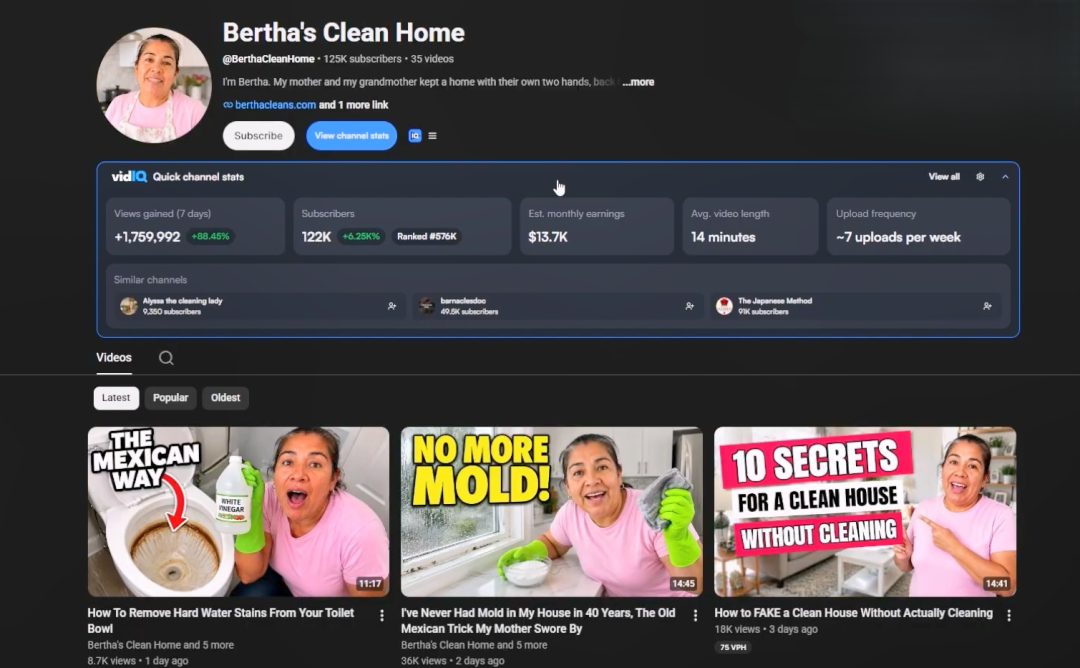
Bertha's Clean Home is a brand-new channel. It has published only 35 videos and made $50,000 last month.
The Japanese method channel was created about two months ago. It received 6.6 million views and made $66,000 last month.
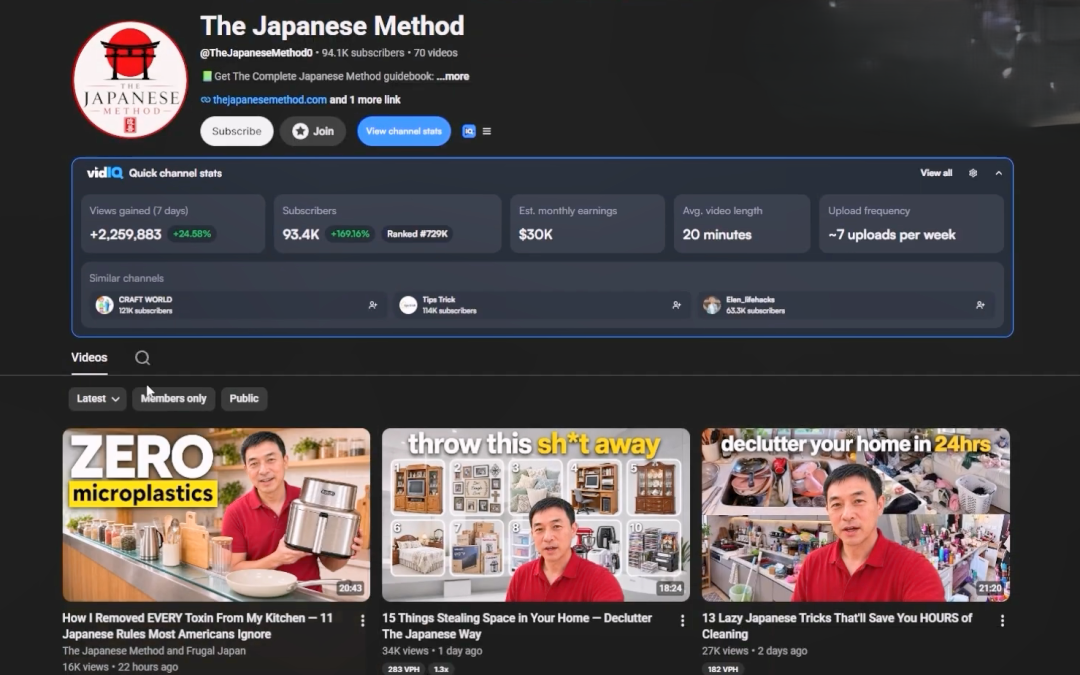
To understand how this model works, the first step is to find and choose the right niche.
First, you need to identify a “profitable niche.” The key is to verify that an audience exists, that it is large enough, and that there is a gap in the market. The main question is whether the field already has personal brands or other on-camera channels. Huge demand means there are many viral videos, often with millions or even tens of millions of views. Limited supply means that when you search for the topic, only a few videos appear, most of them several months or even several years old, with little consistent recent output.
For example, search for “Amish” on YouTube and you will see many older documentaries with millions of views, but little consistently updated Amish content from the past year or two. Demand is huge, and the market gap is clear. One new channel created five months ago received 900,000 views last month. Its audience skews older, its RPM is at least $10, and it makes about $9,000 per month.
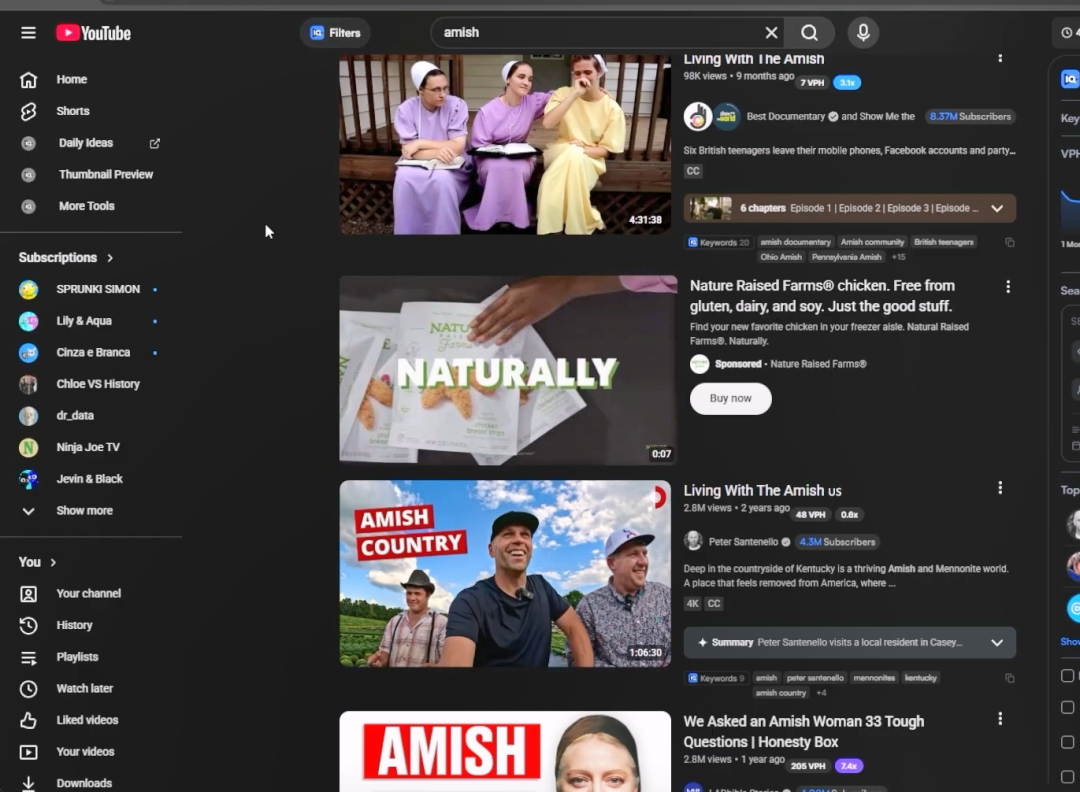
Elias Yoder fills precisely this gap by providing content about the Amish lifestyle. Most people do not know that it is an AI avatar channel. It looks like a real person, but it is actually produced entirely with AI.
You can use Claude by sending it the channels you find and asking it to suggest different angles, similar channels, and keywords. Keywords are extremely important in niche research. For example, if you do not know the term “prepping,” it is difficult to enter the doomsday preparedness niche.
Sources and Validation of Viral Ideas
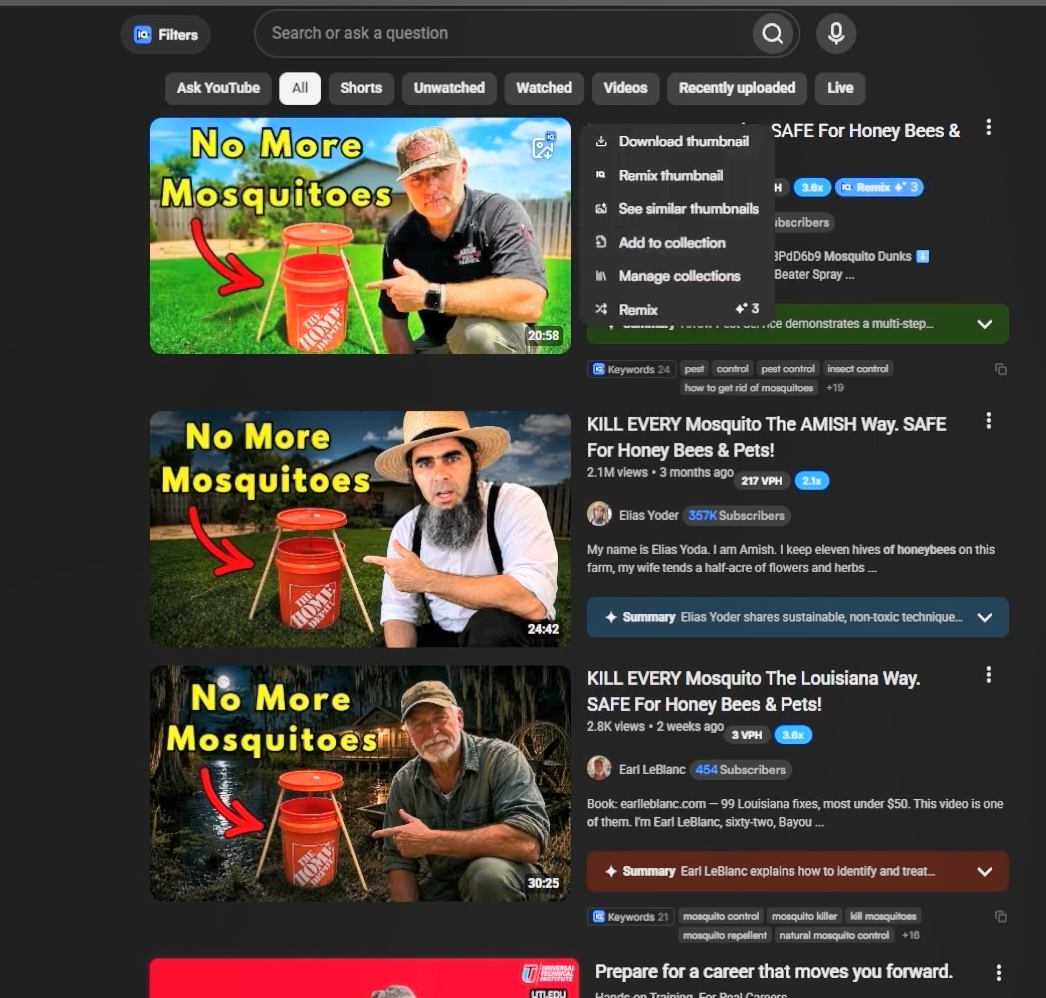
Find viral videos from competing channels and copy their titles into the search bar to discover where their inspiration came from. Many AI avatar channels simply copy proven concepts and replace the original person with their own AI avatar. For example, they may replace Trump in the original video’s thumbnail with an AI character named Rhett Callahan. That is concept validation.

Elias Yoder also copied the same video idea that Arrow Pest Service had published a few months earlier, simply adding “the Amish way.” The core logic behind AI avatar channels is to find personal-brand channels, identify gaps between supply and demand in the market, and then enter with an AI avatar.
The advantage of AI is that we can produce far more content than someone filming in person. A real person needs to travel to different workplaces to film, whereas AI can provide answers in seconds. AI helps us bridge the gap, conduct keyword research, and trace the sources of viral ideas.
At first, this model resembles copying and pasting. Once your income reaches a certain level, however, you must ensure that your ideas are distinctive. You cannot rely solely on copying competitors if you want the channel to last.
Connect VidIQ and Next Level to Claude, then let Claude help you develop video ideas and research topics. If you choose a niche with no demand and a younger audience, using an AI avatar will still be pointless.
Step Two: Generating Video Ideas
Next comes idea generation. The core task is to find video formats that have already gone viral on YouTube.
Here is an example.
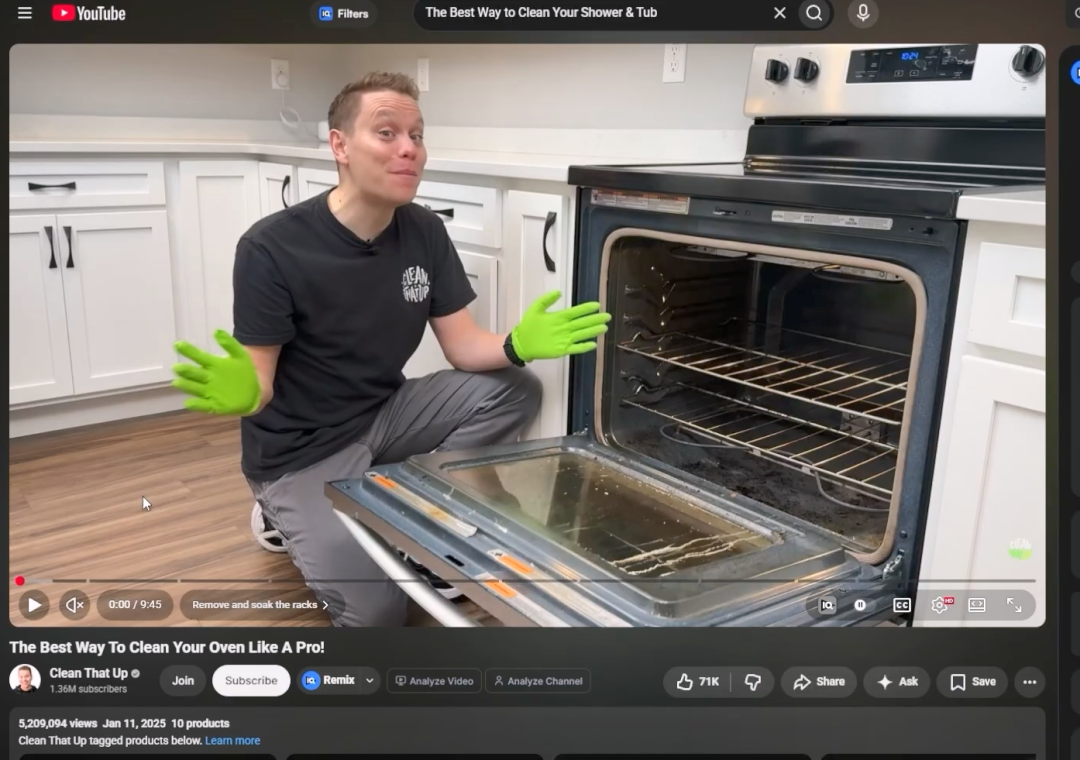
The channel below published its first video a few months ago and achieved its first viral hit with its sixth video. If you copy her title, remove the distinctive tag “the Mexican way,” and search for it on YouTube, you will discover that she copied the title of Clean That Up’s video, “The Best Way to Clean Your Shower and Tub,” almost word for word, adding only “the Mexican way.”
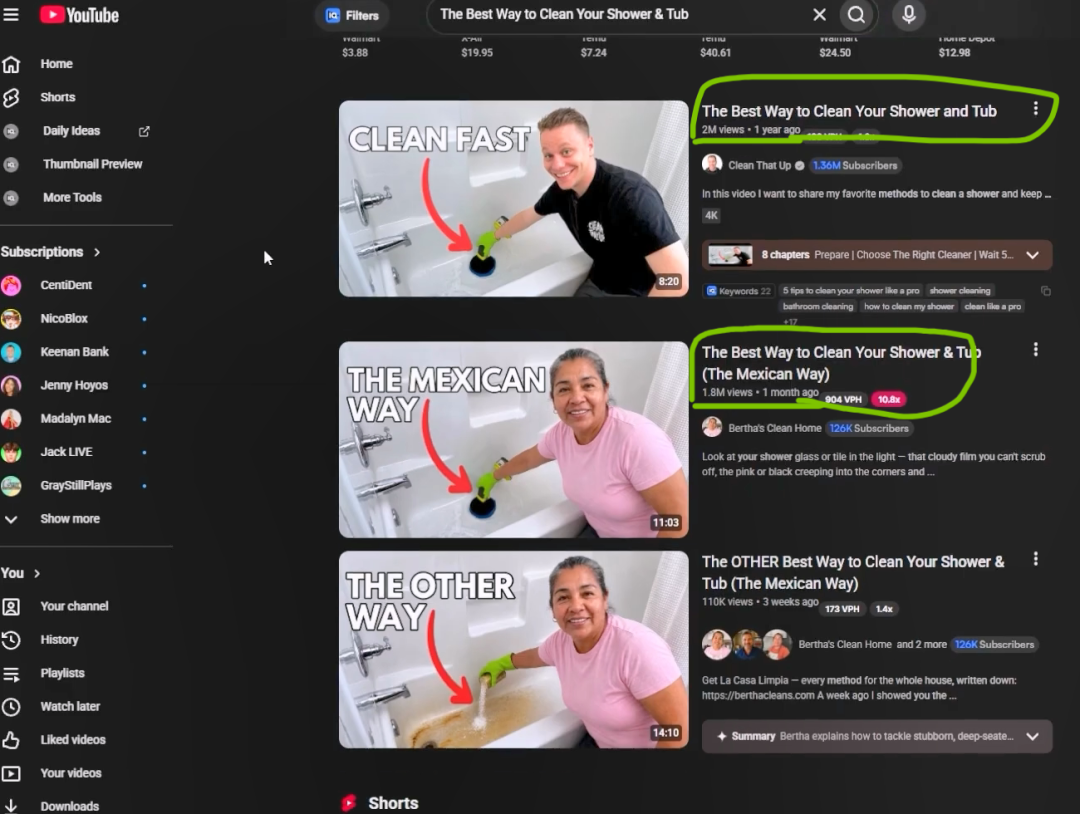
This is somewhat stereotypical, but it did make money. Compared with learning cleaning tips from an ordinary white person, people are more willing to learn from a Mexican person whom they may assume has cleaning experience. The Bertha's Clean Home channel meets that expectation. The original channel’s most popular video is “The Best Way to Clean Your Oven Like a Pro.” Bertha’s second-most-popular video is “The Best Way to Clean Your Oven, The Mexican Way.” It uses the same logic as Elias Yoder: turning the niche’s most prominent characteristic into a distinctive tag.
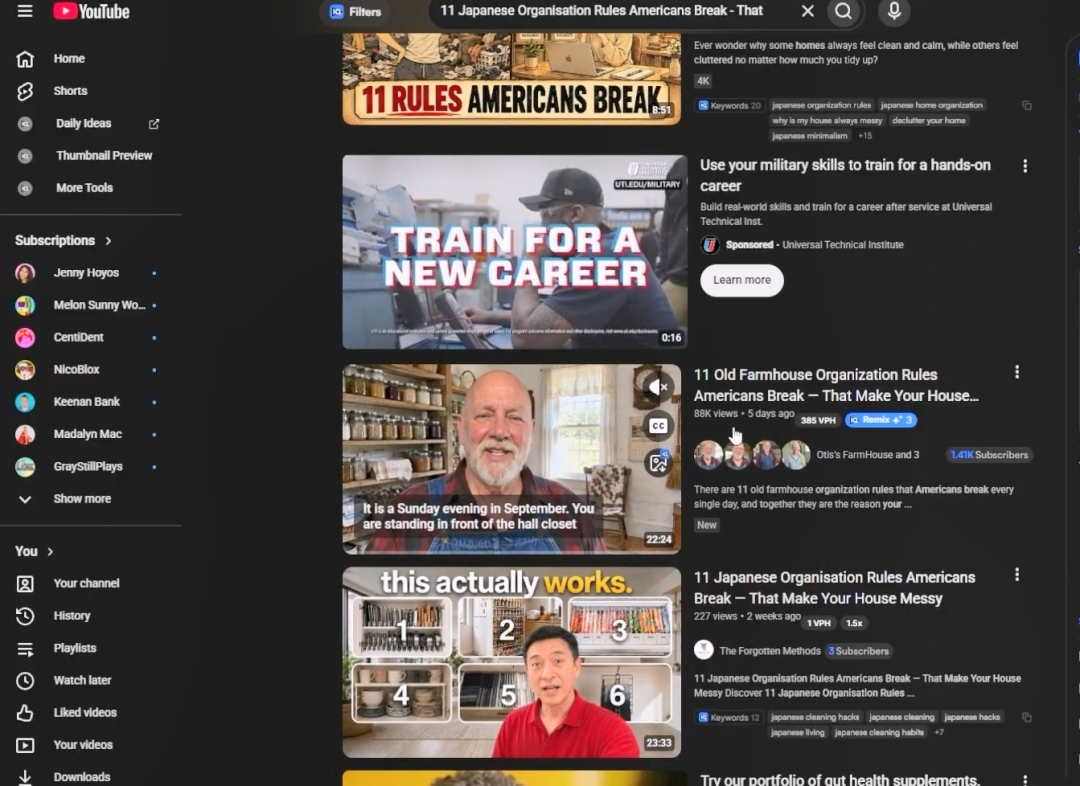
The Japanese method channel made nearly $70,000 last month. Copy one of its titles and search for it, and you will find that the channel also copied an existing viral concept and received 88,000 views. The longer the video, the higher the RPM. Combined with a supply-demand gap and an older audience, the revenue can be extremely substantial.
Core Element: Target an Older Audience
When entering a niche, you must make sure its audience skews older. How can you tell? Look at the comments and ask Claude. When people write long, detailed comments, they are usually middle-aged or older. Think about the last time you left a comment. It may have been nothing more than “Great video” or “Keep it up, I subscribed.” Only middle-aged and older viewers take the time to write long comments. The audience for organization tips, Japanese methods, or Mexican cleaning techniques is largely made up of people aged 30 to over 60, and they have purchasing power. This is why YouTube Shorts do not make money. No matter how many views they receive, they are pointless if the audience does not consist of middle-aged and older viewers in high-RPM regions.
For idea generation, at the beginning you essentially only need to copy viral hits and content that competitors are already making, then replace the person with your AI avatar. Make some changes; you cannot copy it word for word, but that is the basic logic. In the long run, you still need original ideas.
You can also ask Claude to research and generate similar video ideas. Finding competing channels depends on keyword research, which is also why I created the spreadsheet. The left side of the spreadsheet lists search keywords to help you find similar channels. You can also copy the titles of viral videos to find more competing channels to analyze.
Step Three: Scriptwriting
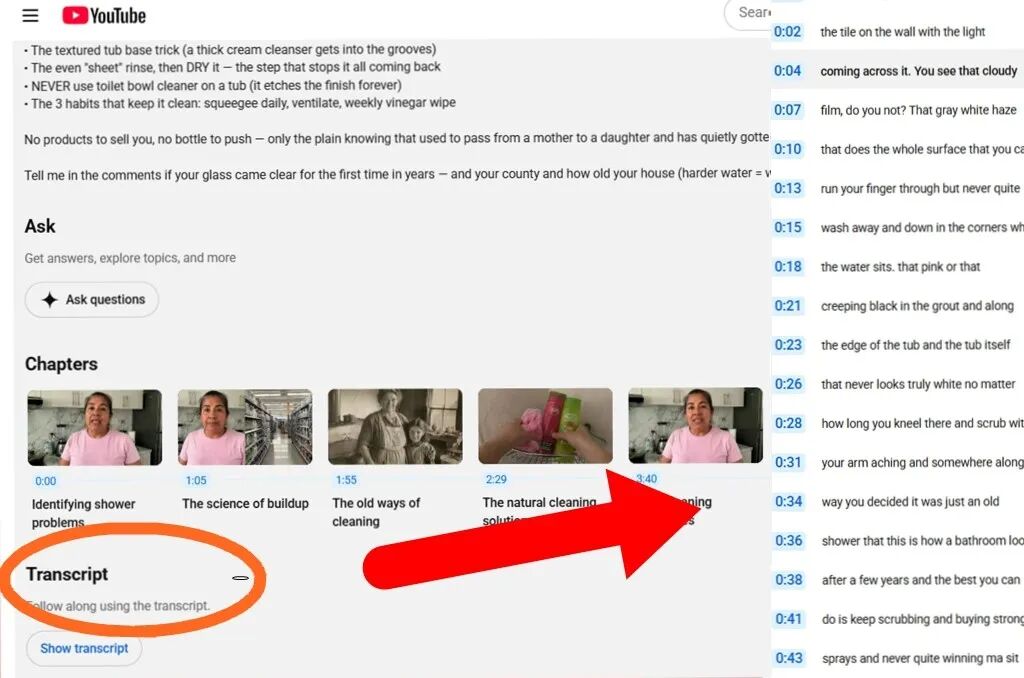
Open a competitor’s viral video and click “Show transcript,” a free YouTube feature. Feed the script to Claude for training so it can learn the hooks, logic, language, and keywords and understand why the script succeeded. Do this only with viral videos, because poorly performing videos may have failed for many different reasons.
For example, the oven-cleaning video shows an extremely dirty oven in its first five seconds and previews the result after cleaning. This provides both the hook that keeps people watching and the promised payoff. Claude is very good at in-depth research and analysis. You can ask it to analyze why the script succeeded, its pacing, and more. You need to understand the “why.” If you do not understand the reason, you cannot repeat the process. The essence of business lies in creating systems and making the process repeatable. You should write scripts based on viral videos while adding your own distinctive qualities.
Step Four: Video Production and Tools
There are many platforms and tools you can use to produce videos, such as VidRush. They are not inexpensive, but they are one of the necessary investments. You can also work manually or build your own tools, depending on your budget and preferences.
In addition to AI-generated assets, you can get B-roll from libraries such as Storyblocks, Pexels, and Pixabay. These videos look boring, but that is precisely why we can attract older viewers: they do not need flashy effects. Start the video with an AI avatar, then cut to stock footage. VidRush can match footage to a script and edit the video.