View report contents
A niche worth entering has to satisfy three conditions: viewers have a clear reason to watch, the content can be produced repeatedly, and the creator can add a meaningful difference. This report extracts reusable structures from gaming, kids music, history, DIY, livestream, education, books, and food examples—moving from “this looks popular” to “this can be tested.”
Selection principle: views reveal an opportunity; they are not the entire answer. Confirm that the audience need lasts, review production and rights constraints, and then validate the idea with a small publishing test.
Niche case
VR animal skits: strengthen character identification with first-person view
Performance signal: A new video exceeded 70,000 views within one day.
Why it works: The player becomes a cat, asks a strict grandmother for a sleepover, and is immediately refused. That prohibition creates a rebellious mission. Cute animals, pranks, and the risk of being caught keep moving the story. Exaggerated Spanish dubbing and saturated visuals fit a young Latin American audience.
Repeatable angle: Use “make a wish + get forbidden + act in secret + almost get caught + complete the goal.” Dialogue can stay simple, but the character voices, actions, and rules must be clear. Establish three recurring characters, then test several family settings.
Niche case
Nursery-rhyme compilations: use familiar melodies for long sessions
Performance signal: Several recent videos reached millions of views within three days.
Why it works: A roughly 20-minute collection combines classic songs with a consistent cast of cute 3D characters and seamless transitions. Children understand through melody, motion, and image rather than complex dialogue, which supports repeat plays and cross-language distribution.
Repeatable angle: Combine four to six songs around one theme—animals, transport, or bedtime. Localizing requires more than replacing audio: adjust lip sync, subtitles, and cultural details. A soft fantasy or regional visual style can separate the series from common saturated templates.
Niche case
History documentaries: combine search longevity with background viewing
Performance signal: Traffic is comparatively steady; a recent high-performing video reached around 66,000 views.
Why it works: Twenty- to sixty-minute videos cover empires, mysteries, and reconstructions of ancient landmarks. A 3D ruin reconstruction creates the opening spectacle, while careful narration and ambient sound support bedtime, commuting, or mealtime viewing. Historical topics can collect search traffic for years.
Repeatable angle: Answer one clear question per video and separate documented facts, reasonable inference, and visual reconstruction. Open with the strongest artifact or conclusion, then return to the timeline. Source citations, image rights, and fact-checking are essential production costs.

Niche case
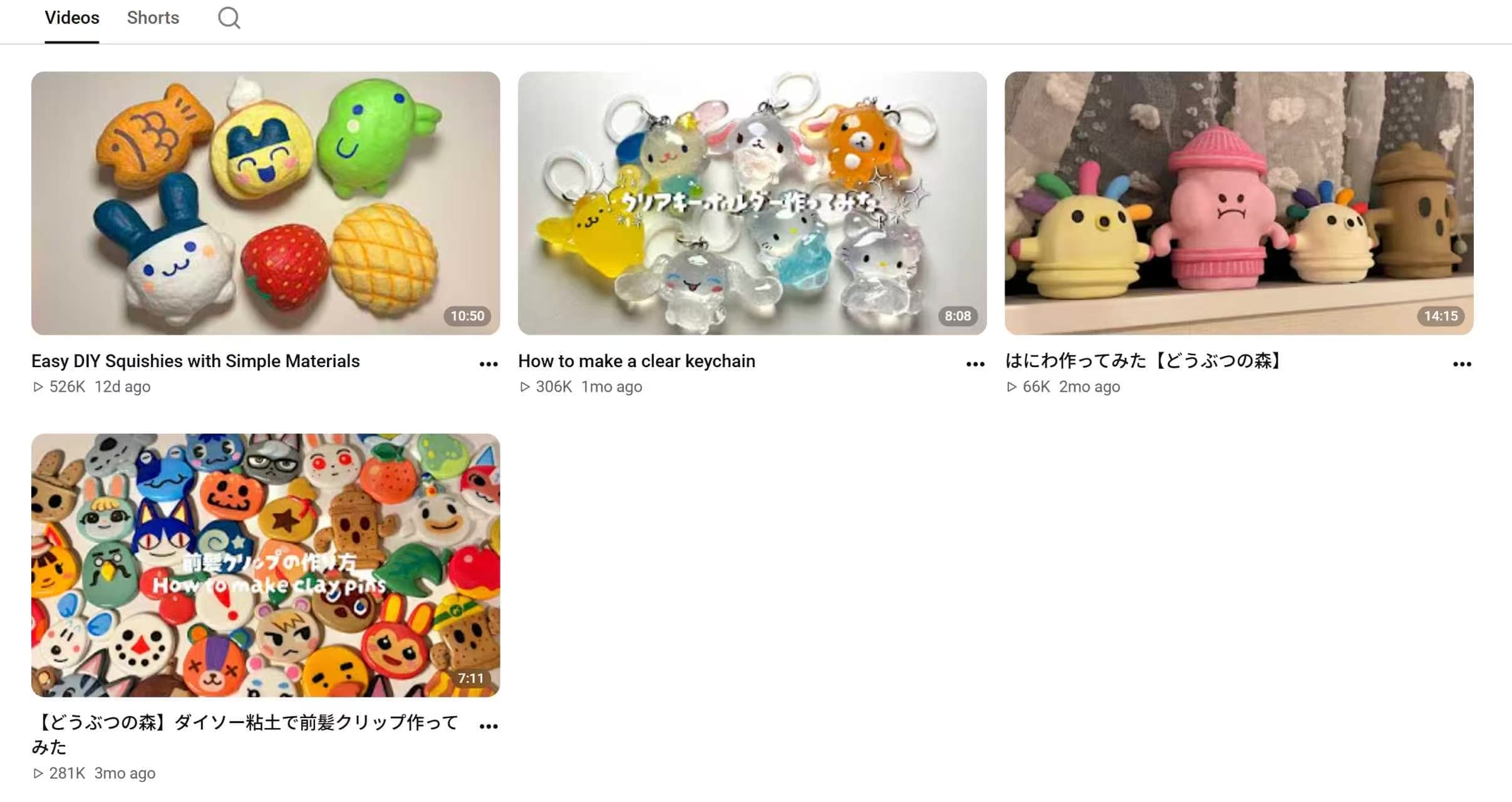
Budget DIY: contrast accessible materials with a premium result
Performance signal: Only four long-form videos accumulated about 1.2 million views.
Why it works: Low-cost material becomes polished slow-rising toys. The first second shows finished fish-shaped pastries, strawberries, and rabbits before the cutting, coating, and shaping process. Scissors, sponge sounds, and text prompts carry the video without a presenter.
Repeatable angle: Choose an appealing final form, easy-to-buy materials, and steps the camera can show completely. Film the finished hook first, then work backward. Emphasize material sound, and keep one material consistent while changing the shape across a series.
Niche case
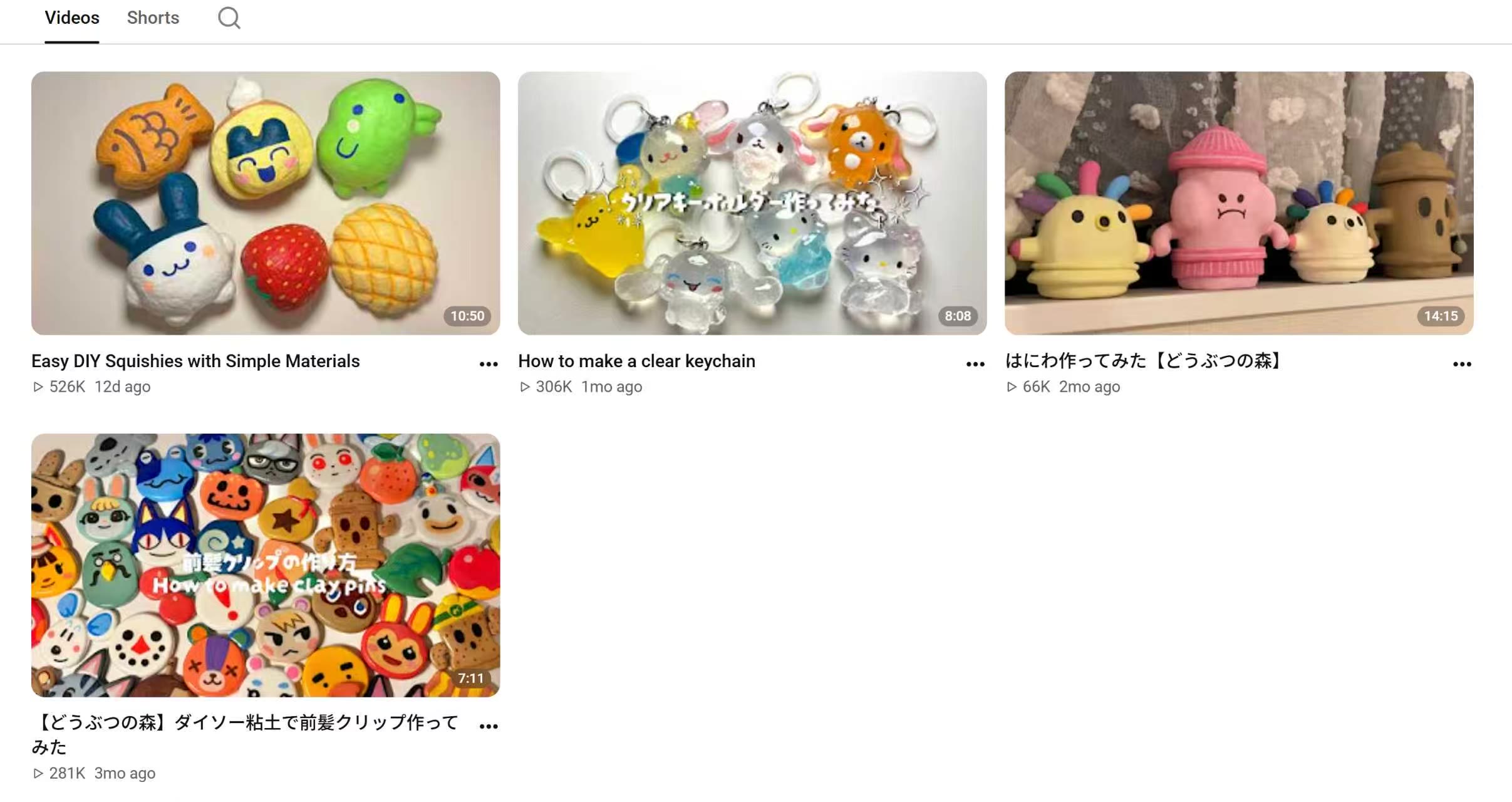
Milk-tea live: make sound the main content
Performance signal: Livestream replays from a recent week generated roughly 10 million views.
Why it works: One- to six-hour sessions are built from ice falling into cups, tea pouring, shaking, and pearls colliding. Viewers can watch closely or use the stream as background sound for work, study, or sleep. Repetition and a visible finished drink give long sessions structure.
Repeatable angle: Plan a continuous sequence of sound-rich actions and remove silent waiting. Use a fixed overhead or close view with a clean background. Give each stream one menu or color theme, then cut the strongest sound moments into Shorts that lead back to the live content.
Niche case
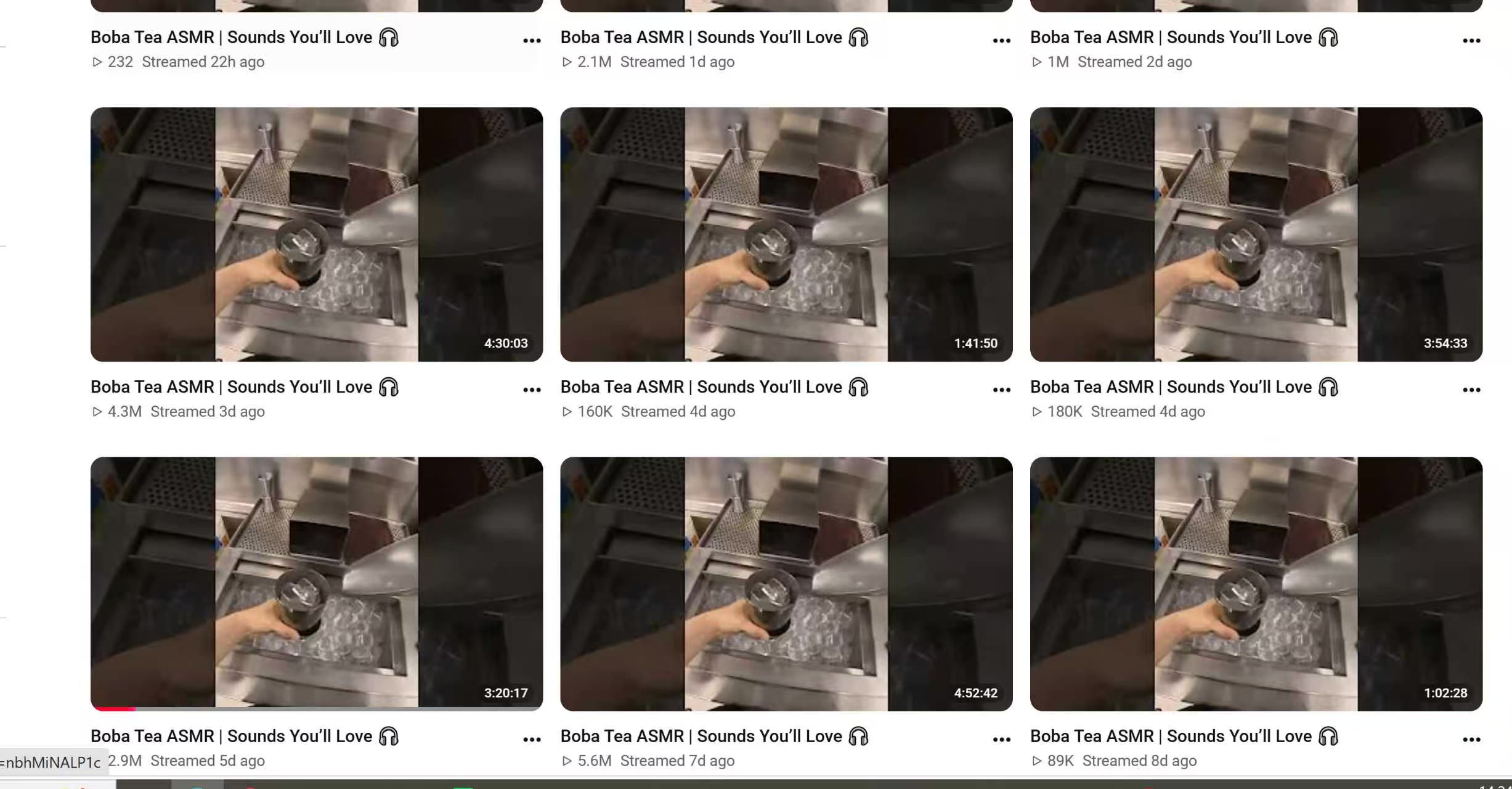
Beach ambient music: earn evergreen views with a specific scene
Performance signal: Twenty-nine videos accumulated about 480,000 views, with some new uploads reaching tens of thousands within days.
Why it works: Around two hours of relaxed electronic rhythm, sunset, and lightly moving waves serves relaxation, travel imagination, and background companionship. A consistent mood and visual language tells returning viewers exactly what they will receive and supports playlists.
Repeatable angle: Define a precise setting instead of generic “relaxing music.” Keep tempo, thumbnail color temperature, and title structure consistent, with subtle changes in mood every 30 minutes. Secure rights for the music, environmental audio, and imagery.
Niche case
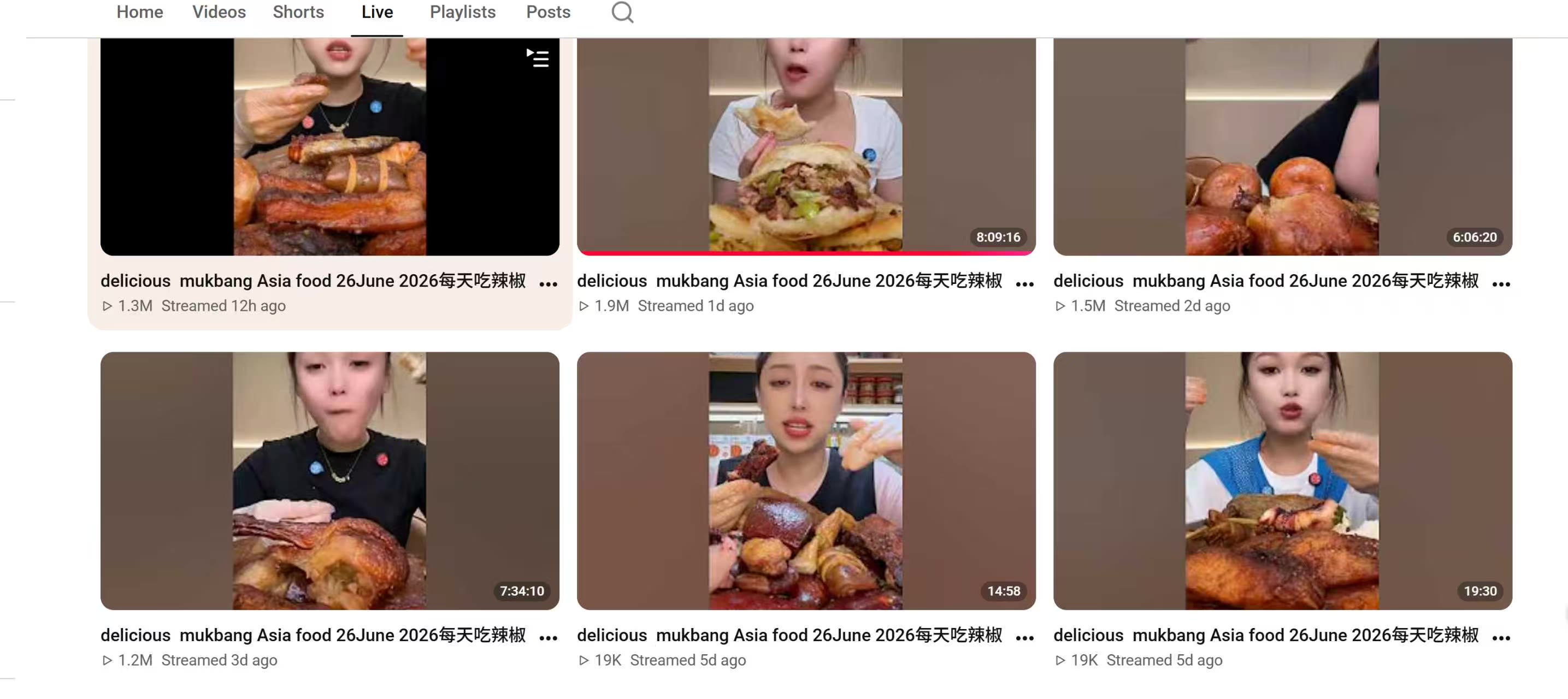
Mukbang live: consistency can move a channel past cold start
Performance signal: Early streams received tens or hundreds of views; after months of consistency, results grew to thousands, hundreds of thousands, and occasionally millions.
Why it works: Mukbang combines companionship, food visuals, and sound in a format with long-standing demand. The strongest signal is not one breakout stream, but a rising baseline after repeated broadcasting. Frequency and an accumulated library can help a channel move beyond cold start.
Repeatable angle: Fix the broadcast time, camera distance, and theme so viewers know what to expect. Develop a distinct hosting style and food selection. Do not republish other platforms’ streams without permission, and follow rules on reused content.
Niche case
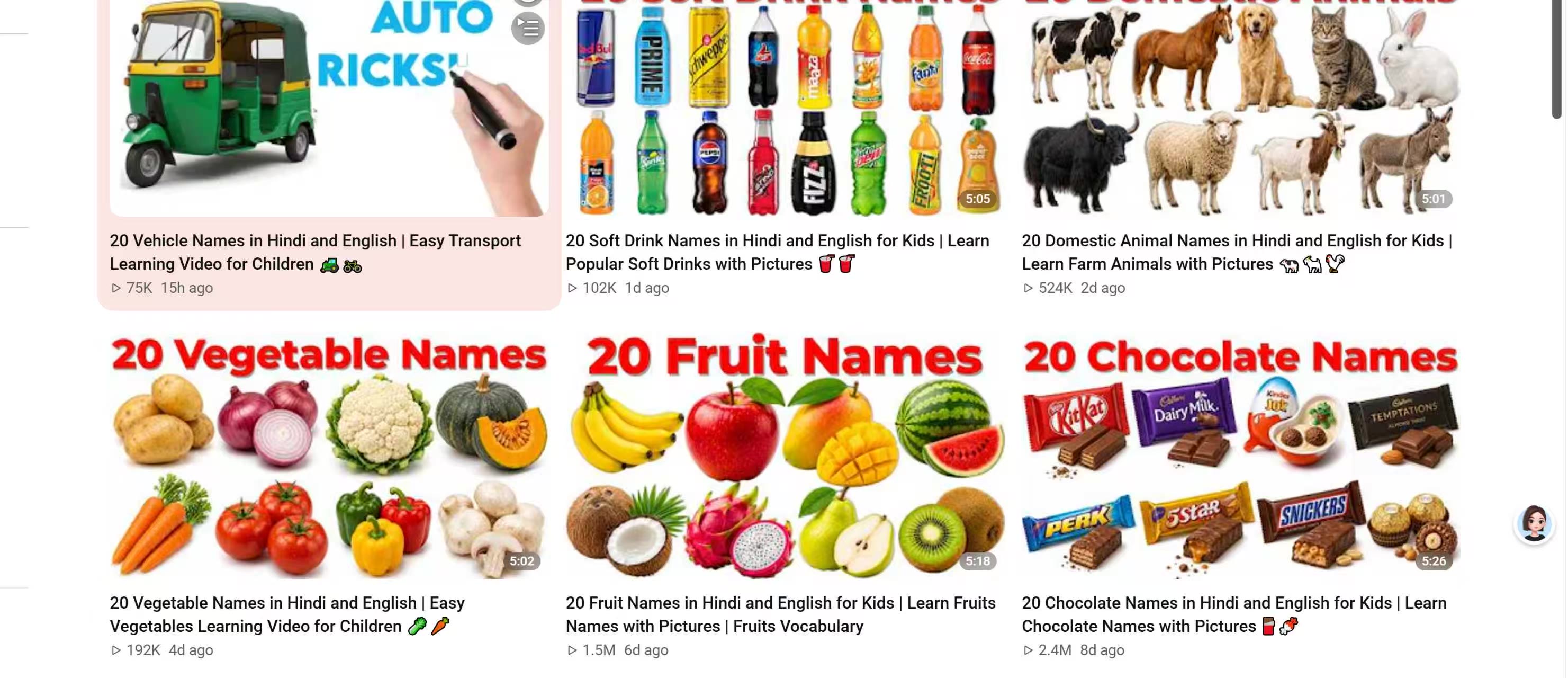
Bilingual early learning: turn one long list into a Shorts matrix
Performance signal: Thirty-four videos accumulated about 7 million views.
Why it works: The video presents common fruit names and pronunciations in Hindi and English. Large images, clear audio, and consistent sequencing make the learning goal obvious. Parents can quickly decide whether the content suits their child without evaluating a complex story.
Repeatable angle: Split a five-minute list of 20 fruits into “three per day” or “red fruits in one minute.” Give each Short one learning goal and finish with a quick review. Verify bilingual subtitles and pronunciation before publishing.
Niche case
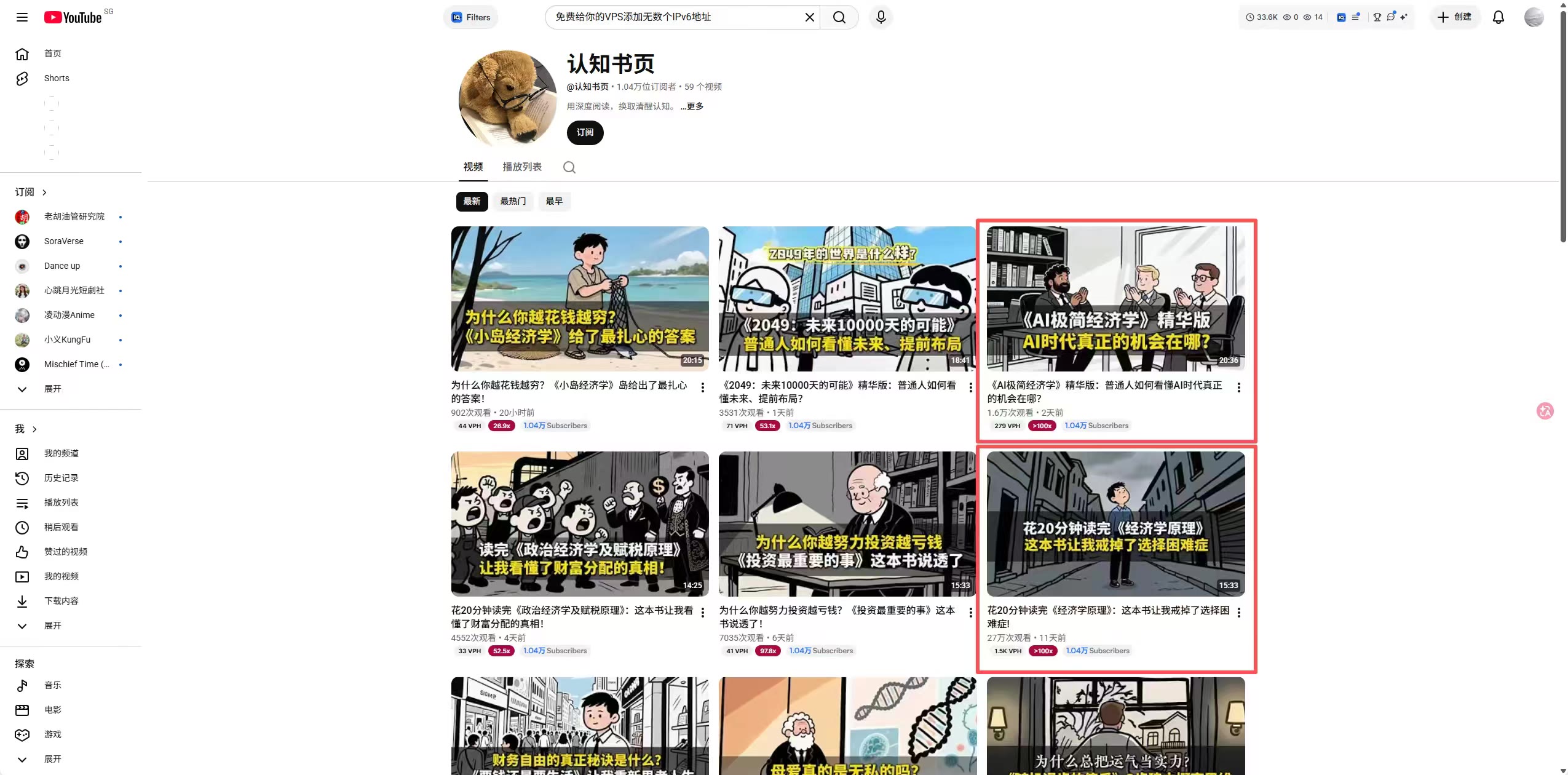
Book-knowledge videos: connect search demand with conversion
Performance signal: Recent weekly views reached roughly 200,000.
Why it works: Books have stable search demand, and one title can support core ideas, character relationships, method lists, and audience-fit videos. The content serves viewers who want a quick understanding and can connect naturally to book purchases or knowledge products.
Repeatable angle: Do not retell every page. Organize your own interpretation, examples, and conclusion around one question. Use a recurring format such as “one concept in five minutes” or “who should read this?” Follow copyright rules and disclose affiliate links.
Niche case
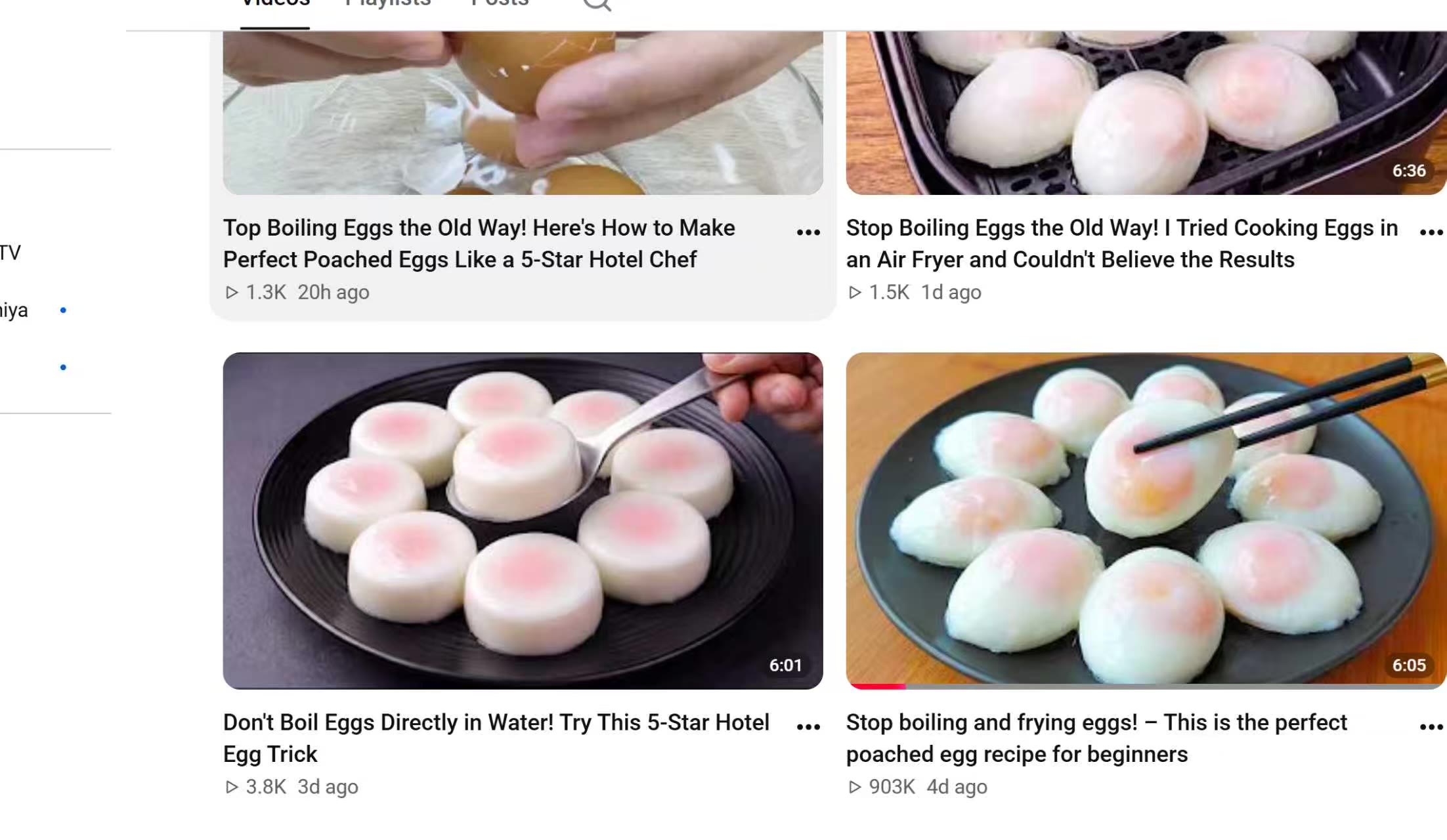
Kitchen problem-solving: cover one ingredient from start to finish
Performance signal: A new six-minute upload reached about 900,000 views in four days.
Why it works: The content follows eggs through selection, preparation, and cooking. The theme stays focused while information density remains high. Practical kitchen questions attract search traffic, and viewers keep watching to compare the final result.
Repeatable angle: Start with one real problem faced by the target audience and structure the video as “problem + cause + demonstration + comparison.” Keep each episode to one ingredient or tool and state the solved outcome in the title. Six to eight minutes is enough for one complete task chain.
Action summary
Use four conditions to confirm your niche
A direction deserves further testing when it has a clear target viewer, a recurring viewing situation, a repeatable production structure, and room for your own difference. If you can explain one viral upload but cannot list the next ten topics, it is not yet a sustainable niche.
Run a two-week minimum test: publish three to five pieces with the same structure while changing only the subject and opening. Record click-through rate, retention, average view duration, and comment needs. Then increase production, adjust packaging, or stop. Niche selection is a process of narrowing the field with real feedback.